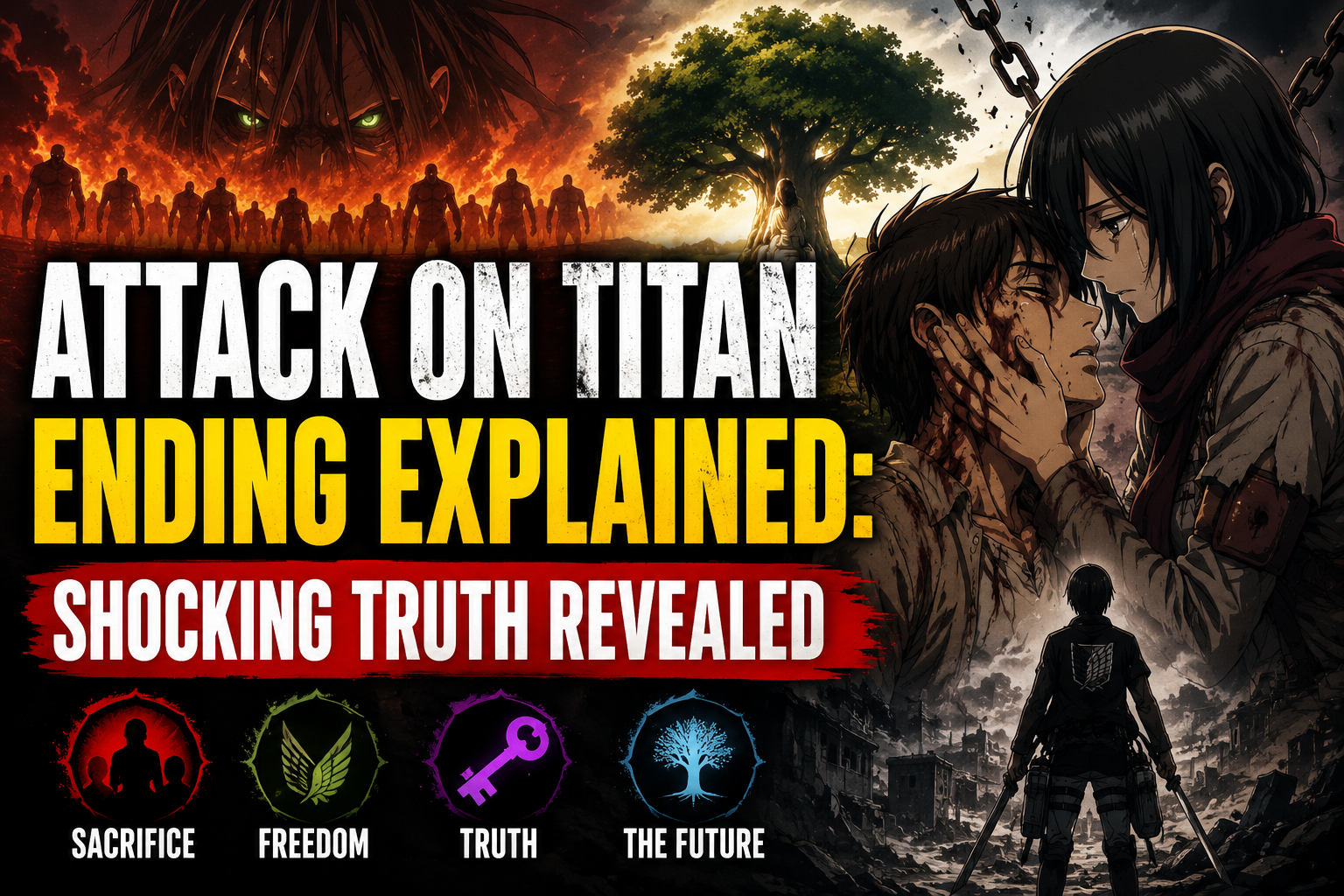
Attack on Titan Ending Explained
The ending of Attack on Titan ending explained is one of the most talked-about anime conclusions ever created. Whether you finished the anime recently or completed the manga years ago, the final episodes leave viewers with many emotional and philosophical questions.
Fans across Reddit, social media, and anime communities continue discussing Eren’s sacrifice, Mikasa’s heartbreaking decision, Ymir’s freedom, the mysterious tree, and the post-credit scene. Some viewers praise the ending as a masterpiece, while others believe it could have been handled differently.
In this guide, we explain every important event in simple language without unnecessary confusion. If you are wondering what really happened and why the story ended this way, this article covers everything you need to know.
You may also enjoy our anime guide:
https://updatedlifestyles.com/jujutsu-kaisen-watch-order/
What Happened in Attack on Titan Ending?
The final battle takes place during the Rumbling, where Eren Yeager uses the Founding Titan’s incredible power to destroy most of humanity outside Paradis Island. His goal appears simple at first, but the truth is much deeper.
Although Eren wanted to protect his homeland, he also knew that his closest friends would eventually stop him. Instead of avoiding his fate, he accepted it because he believed this was the only future where his friends could live long lives.
After an intense battle involving the Survey Corps, Marleyan soldiers, and former Titan shifters, Mikasa reaches Eren inside the Founding Titan.
Despite loving him more than anyone else, she makes the hardest decision of her life.
She kills Eren by cutting off his head, ending the Rumbling forever.
Before his death, Eren and Mikasa share one final emotional moment, making it one of the most unforgettable scenes in anime history.
Immediately afterward, Ymir Fritz finally lets go of the Titan curse, causing every Titan power to disappear from the world.
⭐ Key Points You Should Remember
- Eren started the Rumbling to create a future where his friends could survive.
- Mikasa killed Eren because stopping him was the only way to save humanity.
- Ymir ended the Titan curse after witnessing Mikasa’s choice.
- All Titan powers disappeared after Eren’s death.
- The ending leaves hope and uncertainty through the mysterious tree shown later.
Why Did Mikasa Kill Eren?
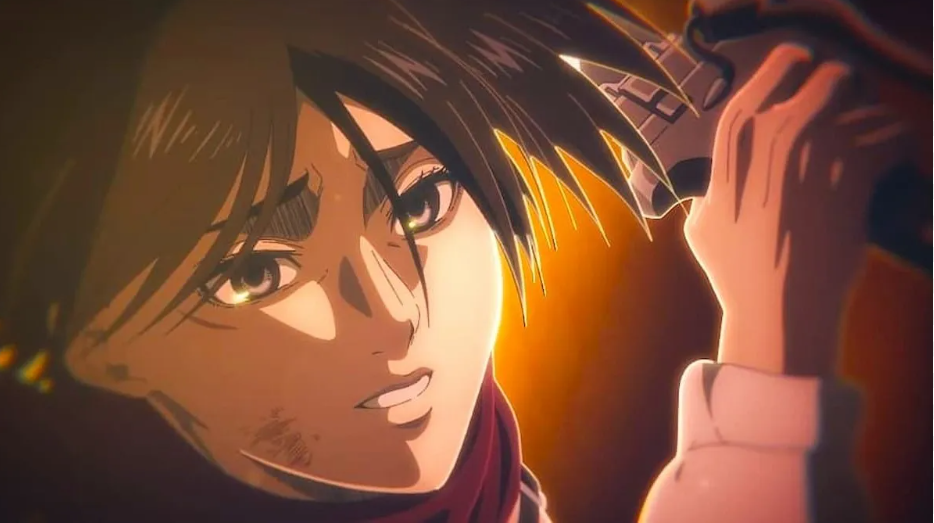
This question has become one of the biggest discussion topics among anime fans.
Mikasa loved Eren throughout the entire series. However, she realized that allowing the Rumbling to continue would mean the complete destruction of the outside world.
Instead of choosing love over humanity, she chose responsibility.
Her decision also helped Ymir Fritz understand that true love does not mean endless obedience. For thousands of years, Ymir remained trapped because of her emotional attachment to King Fritz.
When Mikasa accepted the painful truth and ended Eren’s life, Ymir finally found the strength to break free.
This single action permanently removed Titan powers from existence.
Did Eren Really Love Mikasa?
One of the emotional highlights of the finale is Eren finally admitting his true feelings.
Throughout the series, Eren rarely expressed affection because he believed his destiny was already decided.
During his final conversation with Armin, Eren admits that he wanted to spend his life with Mikasa but knew it would never happen.
He even admits he wished she would remember him for years after his death.
Although tragic, this confession confirms that Eren’s feelings for Mikasa were genuine from the beginning.
Unlike many action-focused anime, Attack on Titan ends by placing human emotions at the center of its story.
Why Is the Ending So Controversial?
Few anime endings have divided fans as much as Attack on Titan.
Many Reddit discussions praise the emotional storytelling and symbolism, while others argue that Eren’s motivations became difficult to understand.
The biggest reasons behind the controversy include:
- Different interpretations of Eren’s true intentions.
- Questions about whether genocide could ever be justified.
- The emotional ending between Eren and Mikasa.
- Changes between readers’ expectations and the actual conclusion.
- Open-ended symbolism that encourages multiple interpretations.
Rather than giving every answer directly, the creator allows viewers to think about freedom, sacrifice, revenge, and the cycle of hatred on their own Hajime Isayama.
That approach is exactly why the ending continues generating discussions years after its release.
How Season 3 Connected to the Ending
Many fans don’t realize that Season 3 quietly prepared viewers for the final chapters of the story.
When the Survey Corps reached the basement, they discovered that humanity existed beyond the walls. This revelation completely changed Eren’s perspective. Instead of fighting Titans alone, he learned that the real conflict involved nations, history, and centuries of hatred.
Season 3 also introduced important ideas about inherited memories and the Attack Titan’s unique ability to connect different points in time. These details became essential for understanding why Eren seemed to know parts of the future.
Without the events of Season 3, the ending would feel confusing because it established the foundation for Eren’s final choices.
The Mysterious Tree Explained
One of the most symbolic moments appears after the main story ends.
Mikasa visits Eren’s grave beneath a large tree throughout her life. As time passes, the tree grows into a massive structure that closely resembles the tree where Ymir Fritz first gained the Titan power centuries earlier.
The tree suggests that history may repeat itself. Rather than confirming the return of Titans, it reminds viewers that conflict and power can always return if humanity fails to learn from the past.
This open-ended symbolism is one of the reasons fans continue debating the ending today.
Who Are the Boy and Dog in the Post-Credit Scene?
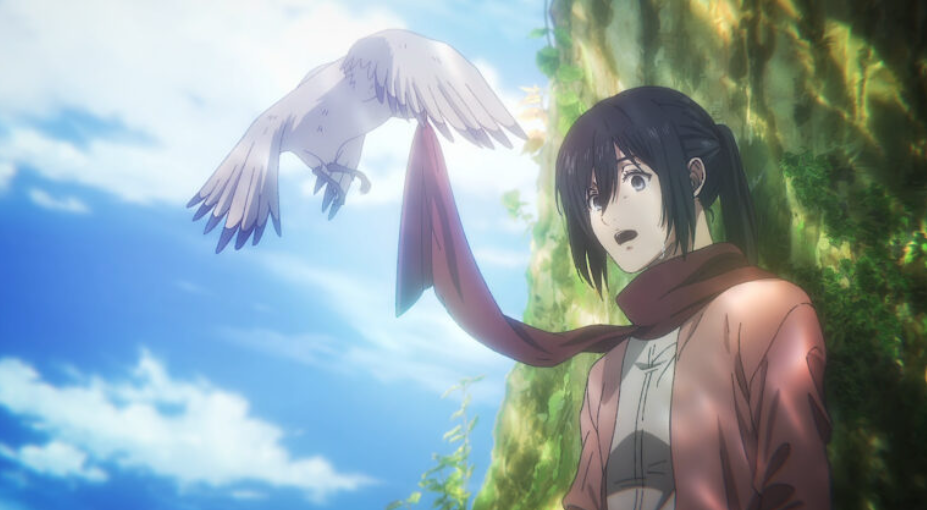
The anime’s post-credit scene jumps far into the future after civilizations have risen and fallen.
A young boy and his dog discover the enormous tree that grew above Eren’s resting place. The scene intentionally mirrors Ymir Fritz’s journey at the beginning of the story.
However, the anime never confirms that the boy gains Titan powers.
Instead, the scene represents possibility rather than certainty. It asks viewers whether humanity will repeat the same mistakes or choose a different future.
Because no official explanation confirms the boy’s fate, the ending remains open to interpretation.
Attack on Titan Ending Controversy
The finale sparked countless discussions across anime communities, especially on Reddit.
Some viewers loved the emotional conclusion because it focused on sacrifice, friendship, and freedom instead of giving every character a happy ending.
Others criticized certain story decisions, including:
- Eren’s complicated motivations.
- The scale of the Rumbling.
- The emotional conversation between Eren and Armin.
- The open-ended post-credit sequence.
- The lack of a completely peaceful future.
Despite these disagreements, the ending continues to be one of the most analyzed conclusions in modern anime.
Manga vs Anime Ending
Many fans search for “Attack on Titan ending manga” (sometimes misspelled as mango).
The anime stays very faithful to the manga while improving several emotional scenes through animation, music, and voice acting.
Some conversations between Armin and Eren were expanded slightly, making Eren’s emotions easier to understand.
Overall, both versions reach the same conclusion:
- Eren dies.
- Mikasa survives.
- Titan powers disappear.
- Humanity attempts to rebuild.
- The future remains uncertain.
Ending Timeline at a Glance
| Event | What Happened | Why It Matters |
| Rumbling Begins | Eren unleashes countless Colossal Titans | Starts the world’s biggest conflict |
| Final Battle | Alliance confronts Eren | Humanity’s last chance |
| Mikasa’s Choice | Mikasa kills Eren | Stops the Rumbling |
| Ymir’s Freedom | Titan curse ends | All Titans disappear |
| Peace Talks | Survivors rebuild the world | Hope for the future |
| Post-Credit Scene | Boy and dog discover the tree | Symbolizes the cycle of history |
Final Verdict
The ending isn’t simply about defeating a villain.
Instead, it explores difficult themes such as freedom, sacrifice, love, revenge, forgiveness, and the consequences of endless violence.
Whether you agree with Eren’s actions or not, his story shows that pursuing absolute freedom through destruction only creates more suffering.
That emotional complexity is exactly why Attack on Titan remains one of the most memorable anime series ever made MyAnimeList
Conclusion
The Attack on Titan ending explained shows that the series was never just about Titans. It was a story about human choices, sacrifice, and the endless struggle for freedom. Eren’s death, Mikasa’s heartbreaking decision, Ymir’s release, and the mysterious post-credit scene combine to create an unforgettable ending that continues inspiring discussion. Whether you loved or questioned the finale, its emotional impact remains impossible to ignore.
Visit our homepage for more anime and entertainment content:
https://updatedlifestyles.com/
Frequently Asked Questions
1. Why did Mikasa kill Eren?
Mikasa killed Eren to stop the Rumbling and save humanity. Her decision also allowed Ymir to end the Titan curse forever.
2. Did Eren truly love Mikasa?
Yes. Eren confessed in the finale that he loved Mikasa but believed his fate prevented them from living together.
3. What does the tree at the end mean?
The giant tree symbolizes the possibility that history may repeat itself. It intentionally leaves the future open to interpretation.
4. Who are the boy and dog in the post-credit scene?
Their identities are never officially revealed. They represent a new generation discovering the mysterious tree and the possibility of another beginning.
5. Is the anime ending different from the manga?
No. The anime follows the manga closely, with only minor dialogue improvements and expanded emotional scenes.